
Foundation Drainage Assessment and Solutions in London, Ontario
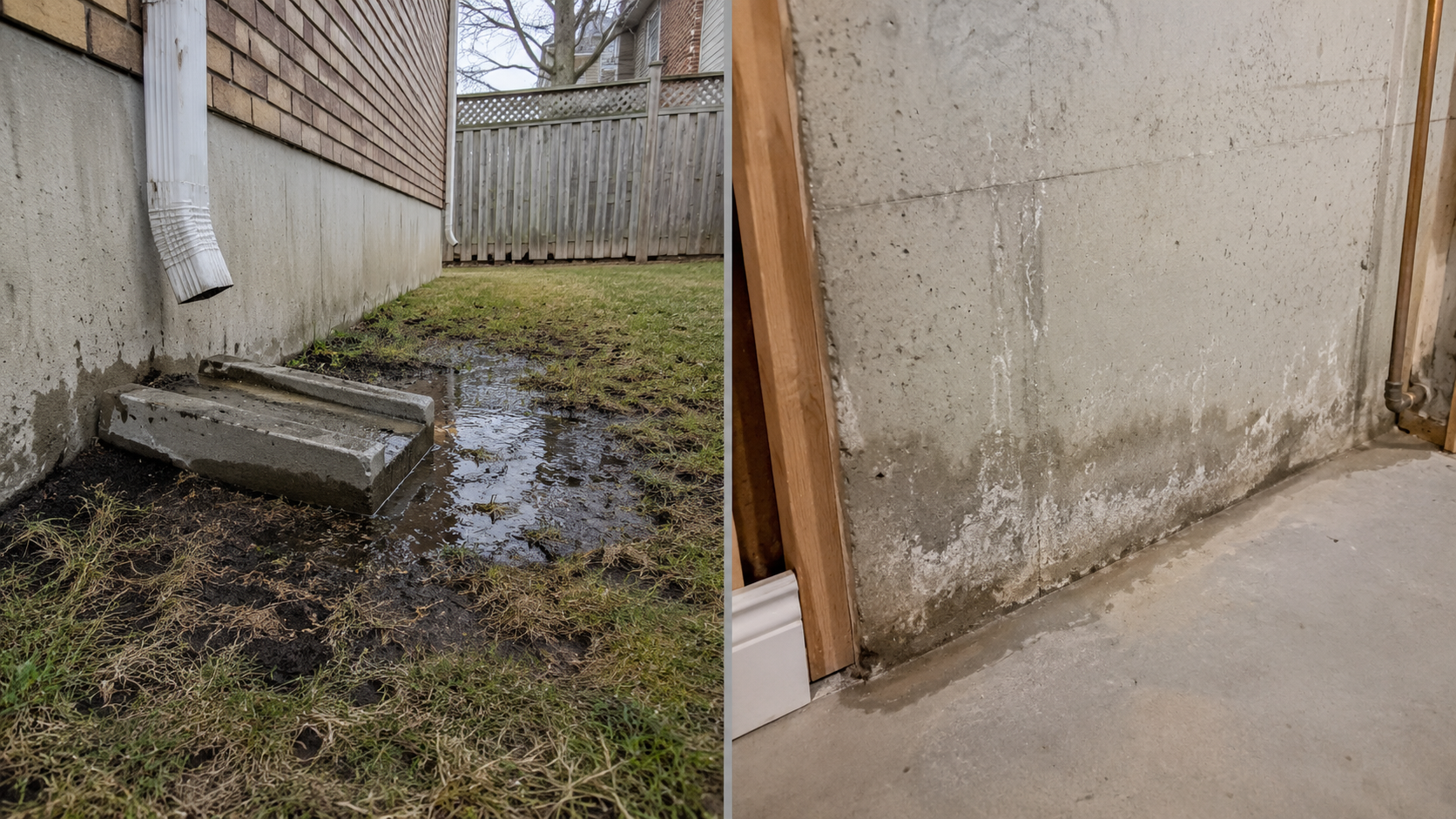
Water pooling along the foundation of a home is one of the most common drainage concerns we see in London and surrounding areas. Foundation drainage focuses on how surface water behaves around your home — especially during heavy rain, snow melt, and seasonal freeze–thaw cycles common in Southwestern Ontario.
When water collects tight to the foundation instead of moving away, it can increase pressure against exterior walls and raise the risk of long-term moisture issues. In many cases, the problem isn’t obvious until specific weather conditions reveal how water is interacting with the structure.
At Lawn Drainage London, we assess how surface water flows around your foundation before recommending any solution. Understanding where the water is coming from — and how it moves — is the first step toward protecting your home.
Before recommending any work, we look at how water actually moves around your property — where it pools, where it runs, and where it's likely to go next time it rains.
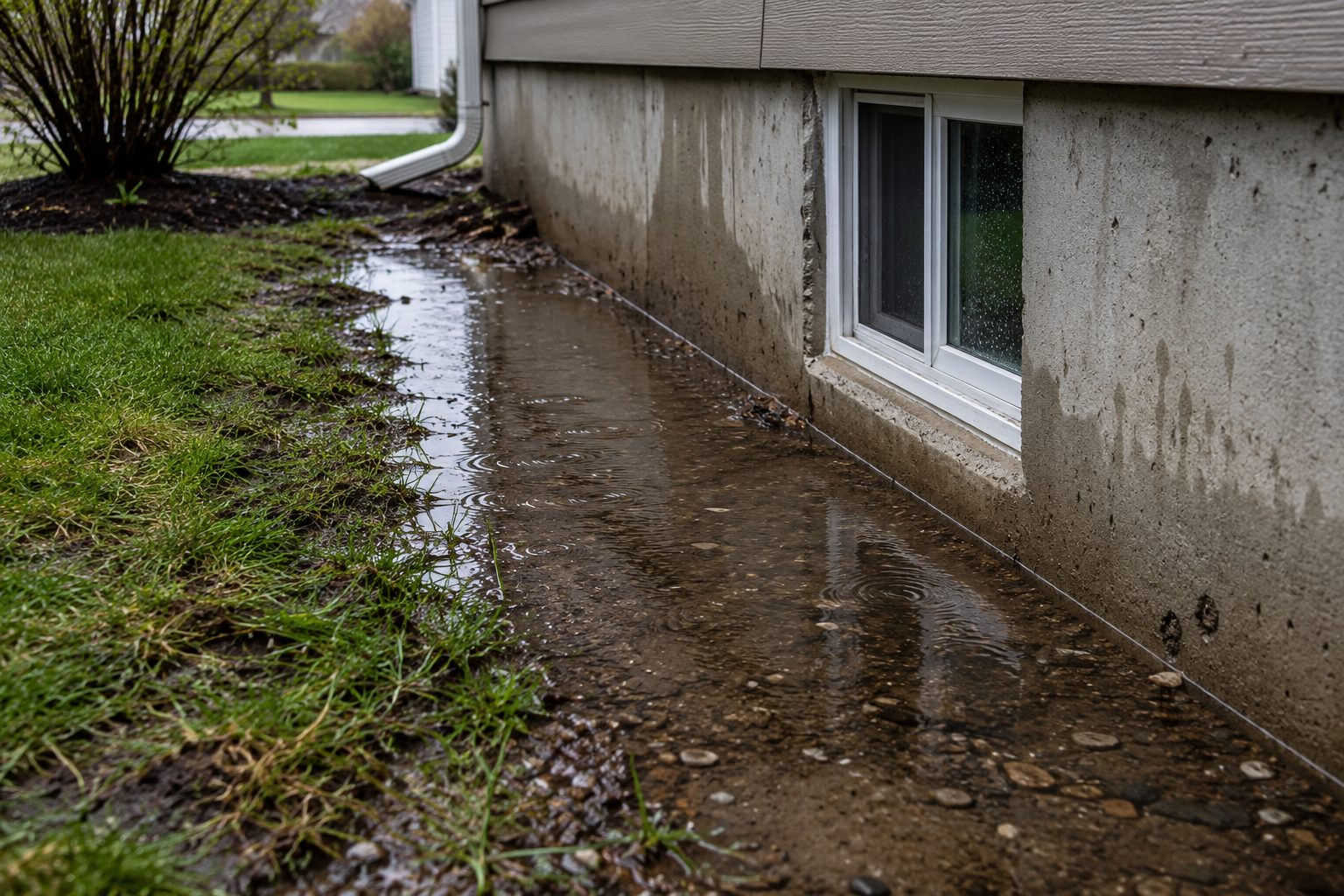
Why Water Collects Near Foundations
Water near a foundation is usually the result of surface water taking the easiest route — especially when the ground can’t absorb water as quickly as normal. In London and surrounding areas, this often shows up during heavy rain, rapid thaws, or back-to-back weather swings.
The key is identifying where the water is coming from and where it wants to go. Water always takes the path of least resistance — so any solution has to start there.
Common Signs Water Is Collecting Near Your Foundation
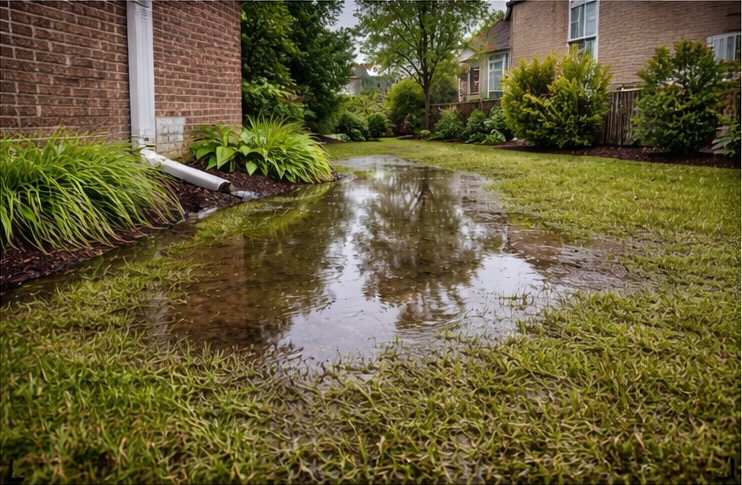
- Water sitting along the base of your foundation after rain or snow melt
- Soil that remains wet or soft near exterior walls
- Water collecting near basement windows or window wells
- Downspouts draining too close to the house
- Recurring damp areas in the same section of yard near the home
- Ice buildup forming along foundation walls in winter
Our Assessment Approach
Most foundation drainage problems in London and surrounding communities come down to one thing: where surface water goes during heavy rain, spring melt, and freeze-thaw cycles. Wet basements, damp foundation walls, and recurring puddles near the house are usually symptoms of something happening at or above the surface — long before water ever reaches the foundation itself.
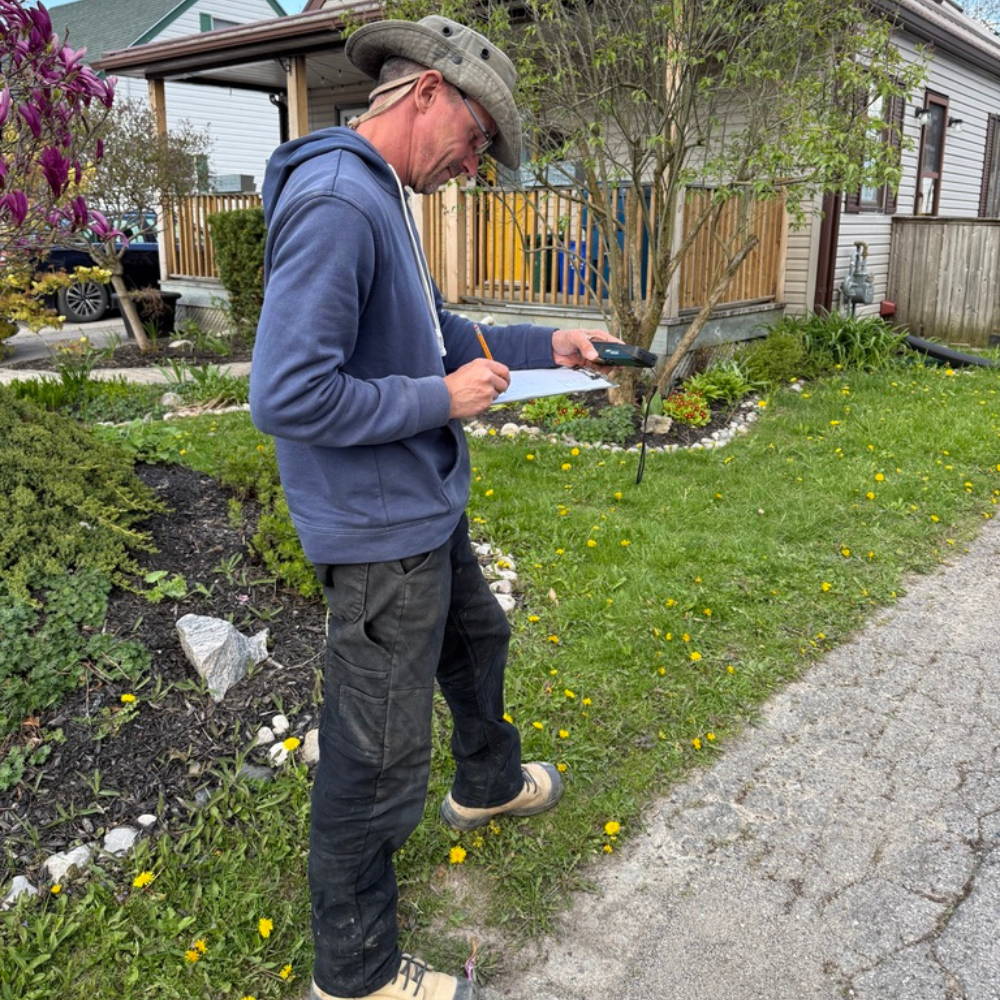
That's why we start every project with an on-site assessment, not a sales pitch.
No two properties drain the same way. Before recommending any work, we walk your property and look at the things that actually determine where water ends up:
- Grading patterns — the slope of your lawn, garden beds, and any settled areas near the foundation
- Downspout discharge points — where roof water is released, and whether it's being carried far enough from the house
- Soil saturation — how your soil holds or sheds water, and where it stays wet longest
- Hard surfaces — how driveways, walkways, patios, and neighbouring properties redirect runoff toward or away from your foundation
We also factor in the things that change with the seasons: frozen ground in late winter, saturated soil during spring melt, and the heavy summer storms that overwhelm gutters and drains.
Understanding the full picture means we can recommend drainage improvements that address the source of the problem — not just the symptoms.
Sometimes that means a swale, a French drain, or downspout extensions. Sometimes it's regrading a section of yard. Occasionally it's a combination of smaller fixes that, together, change how water moves around your home.
Whatever the solution, it starts the same way — on your property, looking at how water moves.
Foundation Drainage Solutions
Depending on what we identify during the assessment, solutions may include improving how surface water flows away from the foundation and preventing recurring pooling around the home.
Our goal is to reduce pressure against the foundation by managing surface water at the source.
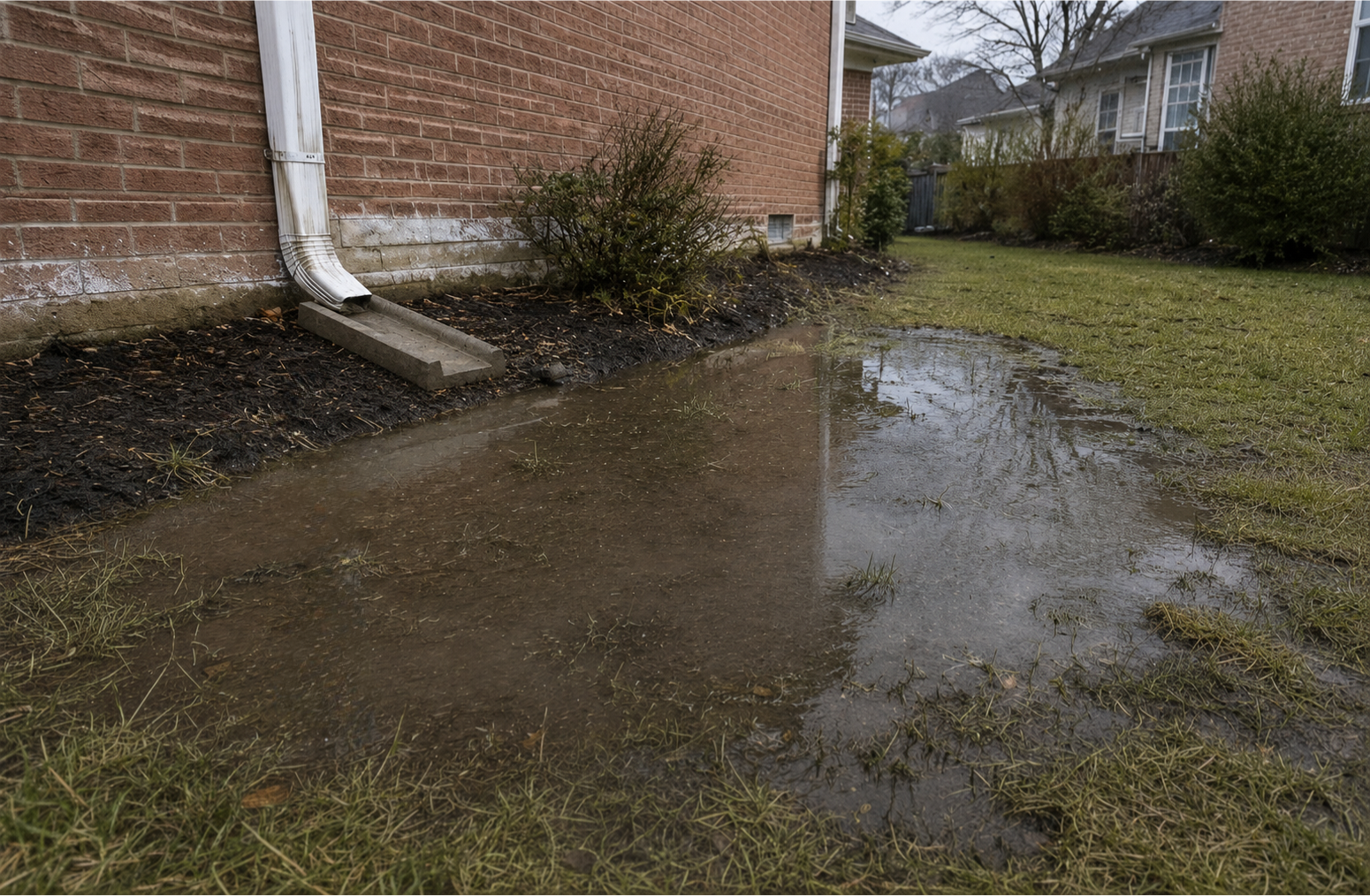
- Downspout extensions — when roof water is being released too close to the foundation
- Surface drainage — improvements to guide water away efficiently
- Catch basins — when water consistently pools in a defined low area
- Drainage piping — to move water away from the foundation edge
- French drains — when ground stays saturated and doesn't dry up between rains.
Foundation Drainage vs. Waterproofing
Foundation drainage focuses on managing surface water outside the home before it has a chance to collect along the foundation or increase moisture risk.
Waterproofing typically addresses moisture after it has already entered.
In many cases, improving exterior drainage early can reduce the conditions that lead to recurring moisture concerns over time.
If you're seeing water pooling outside, foundation drainage is the place to start. If water is already entering your basement, you may need waterproofing as well — and a good drainage solution can prevent it from happening again.
Areas We Serve
Lawn Drainage London provides drainage assessment and drainage evaluation services for homeowners across Southwestern Ontario including:
Aylmer
Chatham
Delaware
Dorchester
Exeter
Goderich
Grand Bend
Ingersoll
Ilderton
Kilworth
Komoka
London
Lucan
Mount Brydges
Port Stanley
Sarnia
St. Thomas
Stratford
Strathroy
Thamesford
Tillsonburg
Woodstock
Zurich
Aylmer
Chatham
Delaware
Dorchester
Exeter
Goderich
Grand Bend
Ingersoll
Ilderton
Kilworth
Komoka
London
Lucan
Mount Brydges
Port Stanley
Sarnia
St. Thomas
Stratford
Strathroy
Thamesford
Tillsonburg
Woodstock
Zurich
Request Your Drainage Assessment
We'll assess how water is moving across your property and help identify the right next step for your drainage concerns.