
French Drain Installation in London & Surrounding Areas
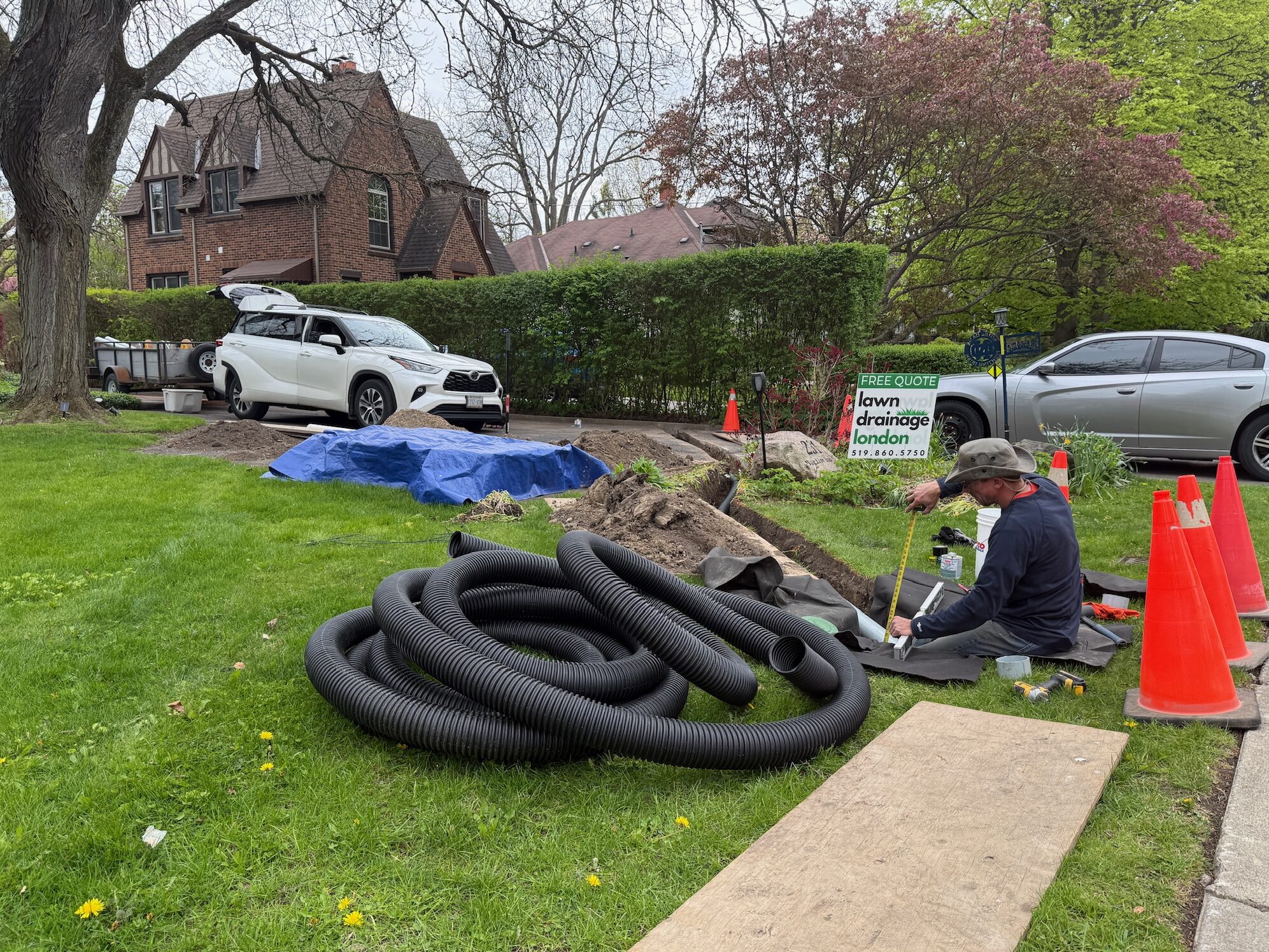
Understanding how water moves on and around your property is the first step to the right solution.
Not Every Wet Yard Needs a French Drain
If you have standing water, a soggy lawn, or an area of your yard that never seems to dry out, a French drain comes up quickly in conversation. It is a well-known drainage solution — but it is not the right answer for every property or every drainage problem.
Before recommending a French drain, we look at where water is coming from, whether the soil is staying saturated, where water discharges, and whether a simpler correction — like redirecting a downspout or regrading a low area — would solve the problem without the larger installation.
What Is a French Drain?
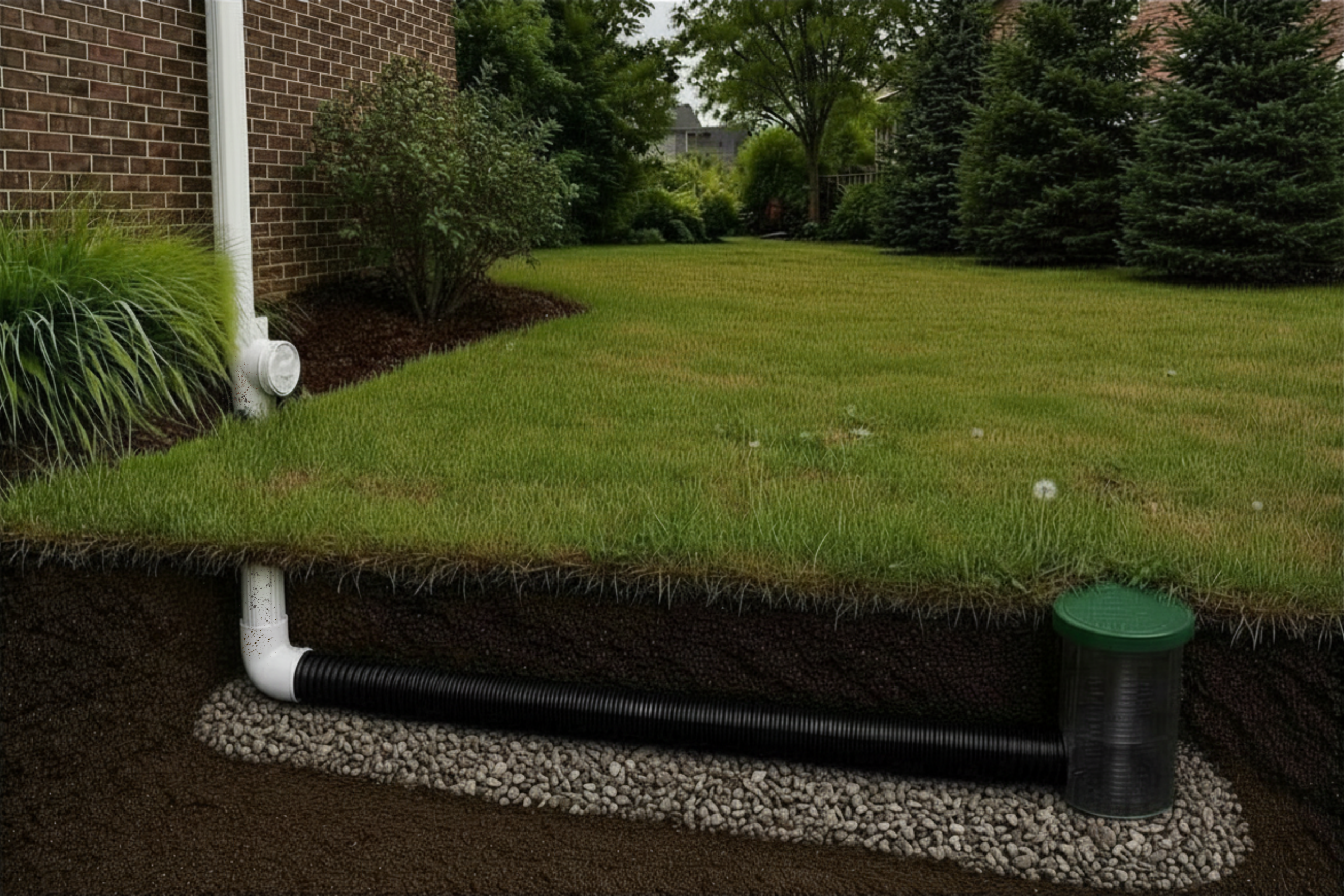
A French drain is a gravel-filled trench with a perforated pipe installed underground. The pipe captures groundwater and subsurface water before it can saturate the surrounding soil, then carries it to a controlled discharge point — typically to daylight at the edge of the property, into a catch basin, or away from the foundation.
French drains are useful when water is moving through or collecting in the soil — not just pooling on the surface. If the ground is staying wet because it is absorbing water faster than it can drain, a French drain gives that water a path to move.
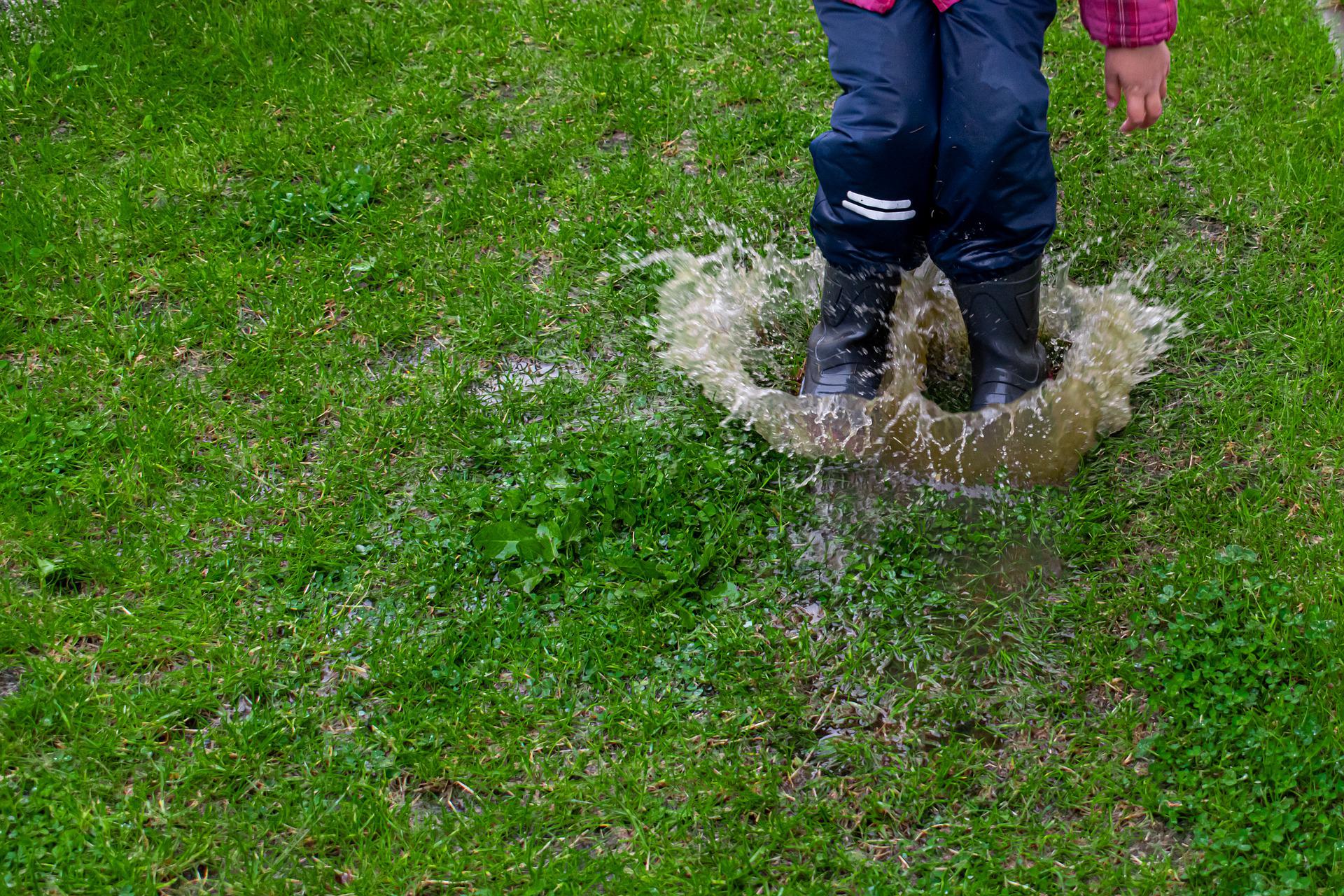
When a French Drain Makes Sense
When a French Drain Is Not the Right Fix
A French drain does not address surface water pooling because of a grading problem. It does not help if the issue is a downspout discharging into a low area. It will not solve a wet basement caused by a crack or failed waterproofing. And it may not be necessary at all if a simpler correction would redirect the water.
If water only pools briefly and drains within a few hours, the yard may not need a French drain — it may need grading, a downspout extension, or nothing more than a minor correction. Part of an assessment is identifying which category your property falls into.
What We Look For Before Recommending a French Drain
During an assessment, we are not just looking at where the water is sitting — we are looking at where it is coming from and whether it is staying. The recommendation depends on the answers.

Is the ground staying saturated?
Soil that does not dry between rain events is a strong indicator that a French drain may help. Soil that drains slowly but does recover may not need one.

Where is the water coming from?
Is it surface runoff? Subsurface water moving from a neighbouring property? Roof water from a downspout? Each source points to a different solution.

What are the downspouts doing?
Downspouts move bulk water. If a downspout is discharging into an area that does not drain, that may be the primary problem — not the soil. Redirecting the downspout may solve the issue before a French drain is needed.

Where does water need to discharge?
A French drain needs a discharge point. We look at what options exist: daylight at the property edge, a catch basin, or a combined drainage path. If there is no good discharge option, the recommendation changes.

How much absorbent surface area is present?
The amount of grass, mulch, and vegetation around the problem zone matters. More grass means more absorption. Less grass means more runoff.
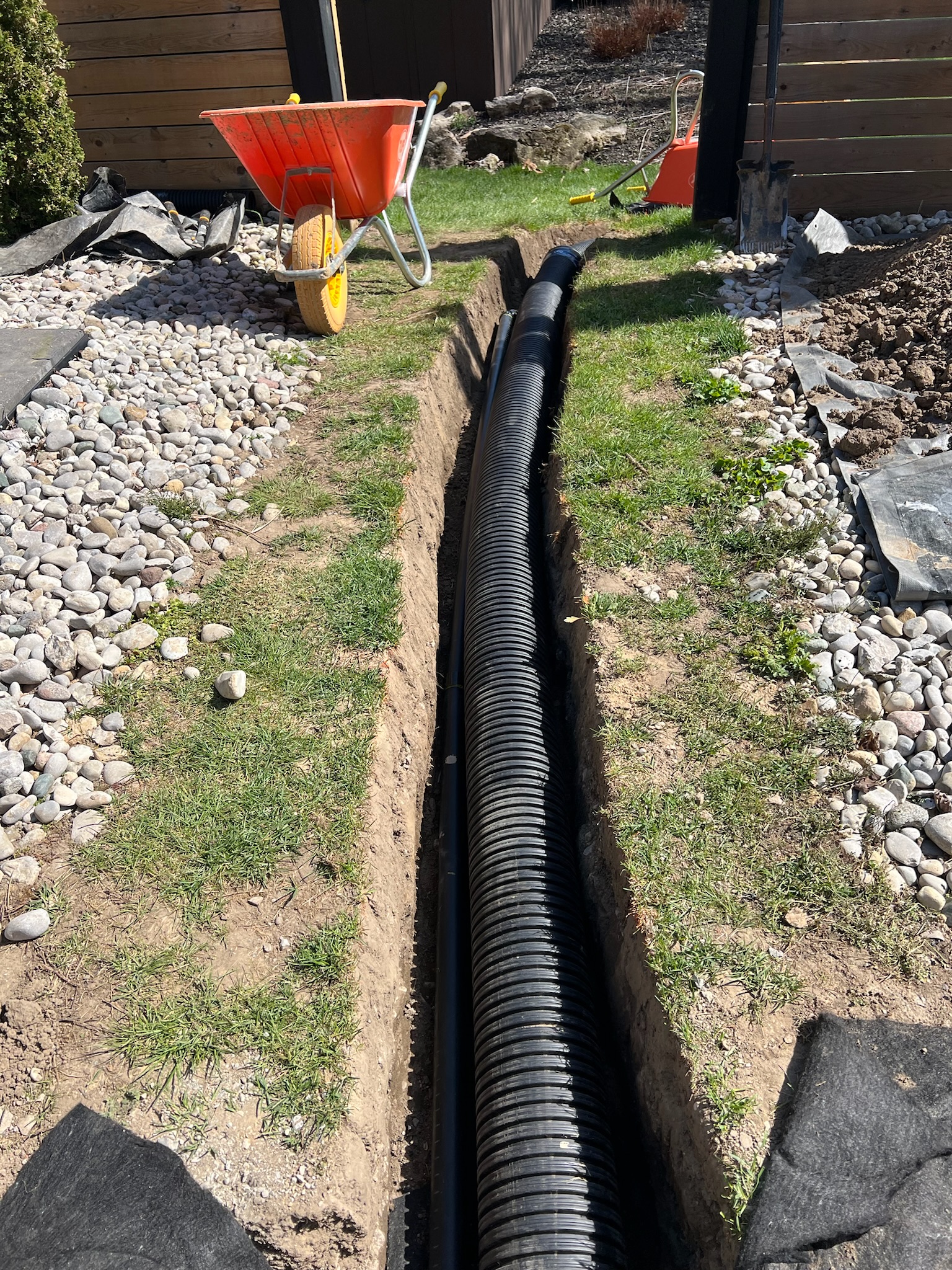
What French Drain Installation Involves
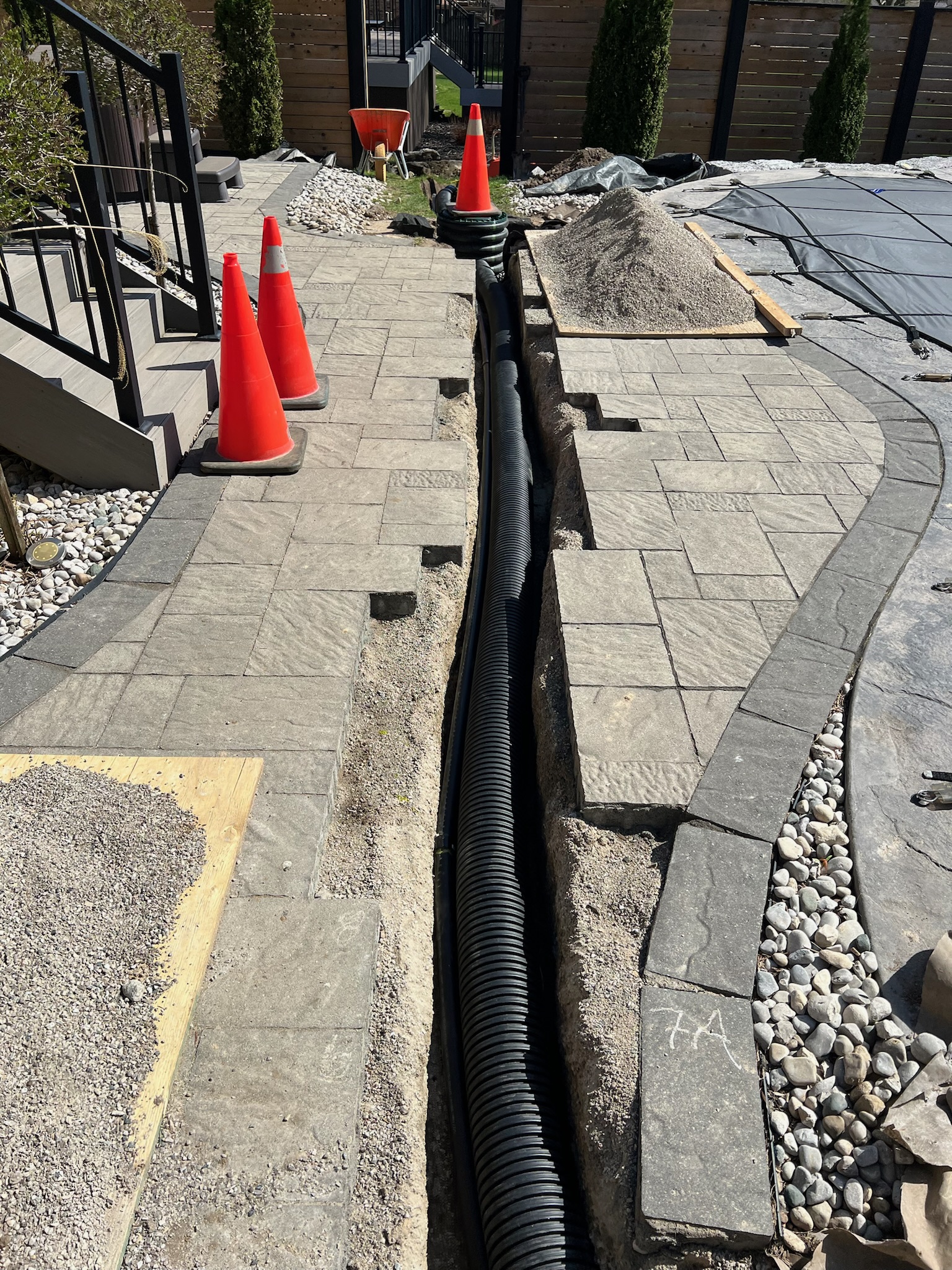
Every French drain installation is different depending on the property — the length of the trench, the depth, the discharge location, and whether any grading or downspout work is being done at the same time. Here is what the general process looks like.
- Assessment and site review: we look at how water is moving, where it collects, and where it can discharge
- Confirmation of the right solution: if a French drain is the recommendation, we explain why and what the installation involves
- Trench excavation: the trench is dug to the correct depth and slope following the drainage path identified during assessment
- Fabric installation: geotextile fabric lines the trench to prevent soil from clogging the gravel over time
- Perforated pipe placement: pipe is set at the correct slope to move water toward the discharge point
- Gravel backfill and pipe wrapping: the trench is filled with clean gravel and the fabric is folded over to protect the system
- Discharge to a safe exit point: water exits at the property edge, into a catch basin, or another controlled discharge location
- Turf and property restoration: disturbed area is graded, topsoil added, and turf restored as close to original condition as practica
Grass, plants, and existing landscaping are protected throughout the job. Drainage work does not have to mean a destroyed yard.
Common Questions: French Drain Installation
How do I know if I need a French drain?
The clearest sign is ground that stays saturated for days after rain — soil that takes on water and does not dry out. If water is pooling on the surface but drains within a few hours, the problem may be grading or a downspout issue rather than a French drain problem. An assessment helps distinguish between the two.
How much does French drain installation cost ?
French drain cost depends on the length of the trench, the depth required, the discharge setup, and whether any grading or downspout work is included. We provide a detailed written quote after the assessment so you know exactly what is involved and why.
How long does French drain installation take?
Most residential French drain installations take one to two days depending on the length and complexity of the trench. We confirm the timeline during the assessment and before scheduling.
Do French drains need maintenance?
A properly installed French drain with geotextile fabric should perform well for many years without regular maintenance. If a system starts to underperform, it is usually caused by sediment accumulation at the inlet or outlet — something we can inspect if concerns arise.
What is the difference between a French drain and a catch basin?
Will installation damage my lawn or landscaping?
French drain installation does disturb the yard along the trench path. We take care of grass, plants, and existing landscaping throughout the job, and we restore the disturbed area with topsoil and turf when the work is done. The goal is to leave the yard in the best practical condition.
Why Homeowners Choose Lawn Drainage London

- NDS Certified
- 4+ years serving London and Southwestern Ontario
- 15+ Google reviews focused on clear assessments, detailed quotes, and property care
- Detailed written quotes — you know what you're paying for and why
- Care for grass, plants, and existing landscaping during every job
- Clear communication and reliable scheduling from quote to completion
Ready to Understand Your Property?
If you have standing water, a soggy lawn, or an area that stays wet after rain, the right first step is an assessment — not an installation. We look at how water is moving on your property before recommending a French drain or any other solution.
No-cost assessment. No obligation. Serving London and Southwestern Ontario since 2022.
Areas We Serve
Lawn Drainage London provides drainage assessment and drainage evaluation services for homeowners across Southwestern Ontario including:
Aylmer
Chatham
Delaware
Dorchester
Exeter
Goderich
Grand Bend
Ingersoll
Ilderton
Kilworth
Komoka
London
Lucan
Mount Brydges
Port Stanley
Sarnia
St. Thomas
Stratford
Strathroy
Thamesford
Tillsonburg
Woodstock
Zurich

Aylmer
Chatham
Delaware
Dorchester
Exeter
Goderich
Grand Bend
Ingersoll
Ilderton
Kilworth
Komoka
London
Lucan
Mount Brydges
Port Stanley
Sarnia
St. Thomas
Stratford
Strathroy
Thamesford
Tillsonburg
Woodstock
Zurich
Request Your Drainage Assessment
We'll assess how water is moving across your property and help identify the right next step for your drainage concerns.